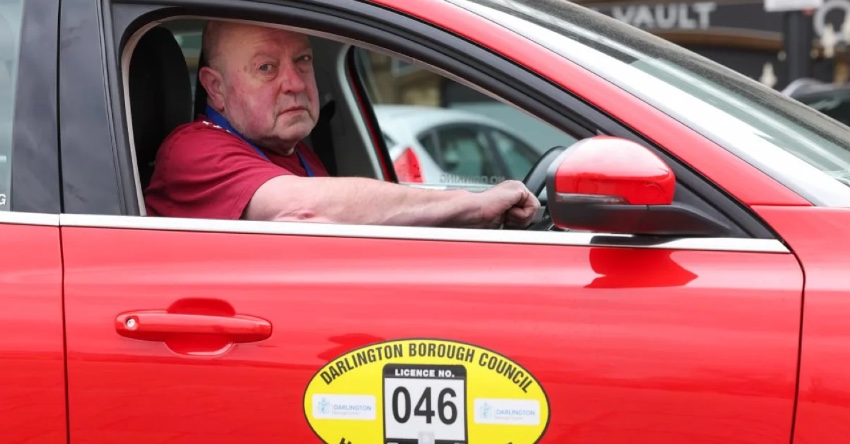
Taxi Driver Warns of Public Safety Risk After Darlington Council Axes Marshal Scheme
A veteran taxi driver in Darlington has voiced serious concerns over public safety following the borough council’s decision to terminate its taxi marshal programme, a move he describes as “short-sighted.” Gavin Ellis, 65, argues the marshals were a critical layer of protection for drivers and passengers, a point underscored by their final shift during which they reportedly intervened in three separate fights.
The scheme, operational since 2021, was established to manage crowds at the town’s busy taxi ranks during peak night-time hours and to safeguard vulnerable individuals. Ellis, who represents the local taxi trade, highlighted the marshals’ proactive role. “Ironically, on their last night, they split at least three potential fights up,” he stated. He characterised the marshals as indispensable, noting they helped manage “unscrupulous customers,” prevented queue-jumping, and de-escalated violent situations.
Council Cites Changing Nightlife and Budget Constraints
Darlington Borough Council defended the cessation of the scheme, pointing to evolving night-time economy patterns and reduced funding as the primary drivers. Councillor Jim Garner acknowledged the positive work of the marshals but explained the decision was a response to shifting conditions. “With the change in habits, less demand at taxi ranks, alongside reduced funding, we felt now was the time to bring the initiative to a close,” he said.
Council officials emphasised that the town’s broader safety infrastructure remains robust. Darlington holds a prestigious “Purple Flag” accreditation, a standard for safe and vibrant night-time environments. Additional measures cited include CCTV surveillance with help buttons and regular police patrols in the town centre.
Trade Fears Return to Pre-Scheme Dangers
Despite the council’s assurances, those working on the front lines remain unconvinced. Ellis, who mounted an unsuccessful petition campaign to save the roles, drew on specific past incidents where marshal intervention prevented serious injury or worse. His primary fear is for the future safety of the Grange Road taxi rank, a key hub.
Expressing deep apprehension, he warned of the human cost of the decision: “I sincerely hope somebody’s son or daughter does not become a victim of this short-sighted decision.” The trade’s perspective centres on the loss of a dedicated, visible deterrent and immediate response unit that operated precisely when and where disorder was most likely to occur.
The situation presents a classic clash between municipal budget management and on-the-ground perceived risk. While the council points to overall safety credentials and changing demand, the taxi trade insists the specialised, preventative function of the marshals is irreplaceable by generic patrols. The effectiveness of the remaining safety net will now be tested without this targeted intervention service.
Image Credit: www.phtm.co.uk