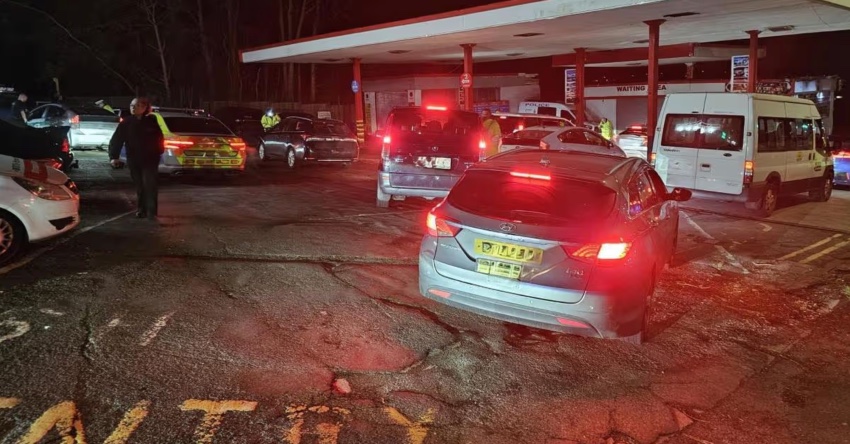
Major Taxi Safety Sweep in North West Leads to 12 Suspensions
A coordinated enforcement operation across the North West of England has underscored the critical importance of taxi safety, resulting in the immediate suspension of 12 vehicles and the inspection of nearly 200 others. The sweep, conducted on Saturday, March 14, targeted areas including Preston, Chorley, and South Ribble, focusing on unlicensed drivers and vehicles that posed a risk to passengers and other road users.
This proactive initiative, led by local licensing authorities and police, aimed to verify that taxis were not only properly licensed but also mechanically sound and compliant with stringent local regulations. The operation highlights a continued regional focus on safeguarding the public, particularly during evening and night-time economies where demand for licensed transport is high.
What the Inspection Uncovered
Officers from Preston City Council, South Ribble Council, Sefton, Knowsley, Blackburn with Darwen, and Wolverhampton Councils joined forces with Lancashire Constabulary’s Roads Policing Unit to establish checkpoints at strategic locations. Inspectors conducted thorough examinations, with a specific focus on fundamental safety features mandated by the UK’s Vehicle and Operator Services Agency (VOSA) guidelines and local licensing schemes.
Of the 198 vehicles subjected to detailed checks, 12 were immediately prohibited from operating due to what police described as “dangerous defects.” Common issues identified included illegal tyre tread depths falling below the UK legal minimum of 1.6mm across the central three-quarters of the tread, faulty brake lights, and inoperative seatbelts. Such defects significantly increase stopping distances and reduce occupant protection in the event of a collision, directly contravening the Road Vehicle (Construction and Use) Regulations 1986.
A Collaborative Effort for Public Safety
Sgt Ben Elliott, from the Lancashire Constabulary Roads Policing Unit, emphasized the operation’s core objective: protecting the community. “This operation brought together multiple agencies to ensure people are kept safe, that taxis are properly licensed, roadworthy and driven by people who meet the standards expected of them,” he stated. The multi-agency approach leverages the distinct expertise of council licensing officers—who validate driver and vehicle paperwork—and police officers, who are trained in advanced vehicle safety inspections and traffic law enforcement. This model is recognized
Image Credit: www.phtm.co.uk