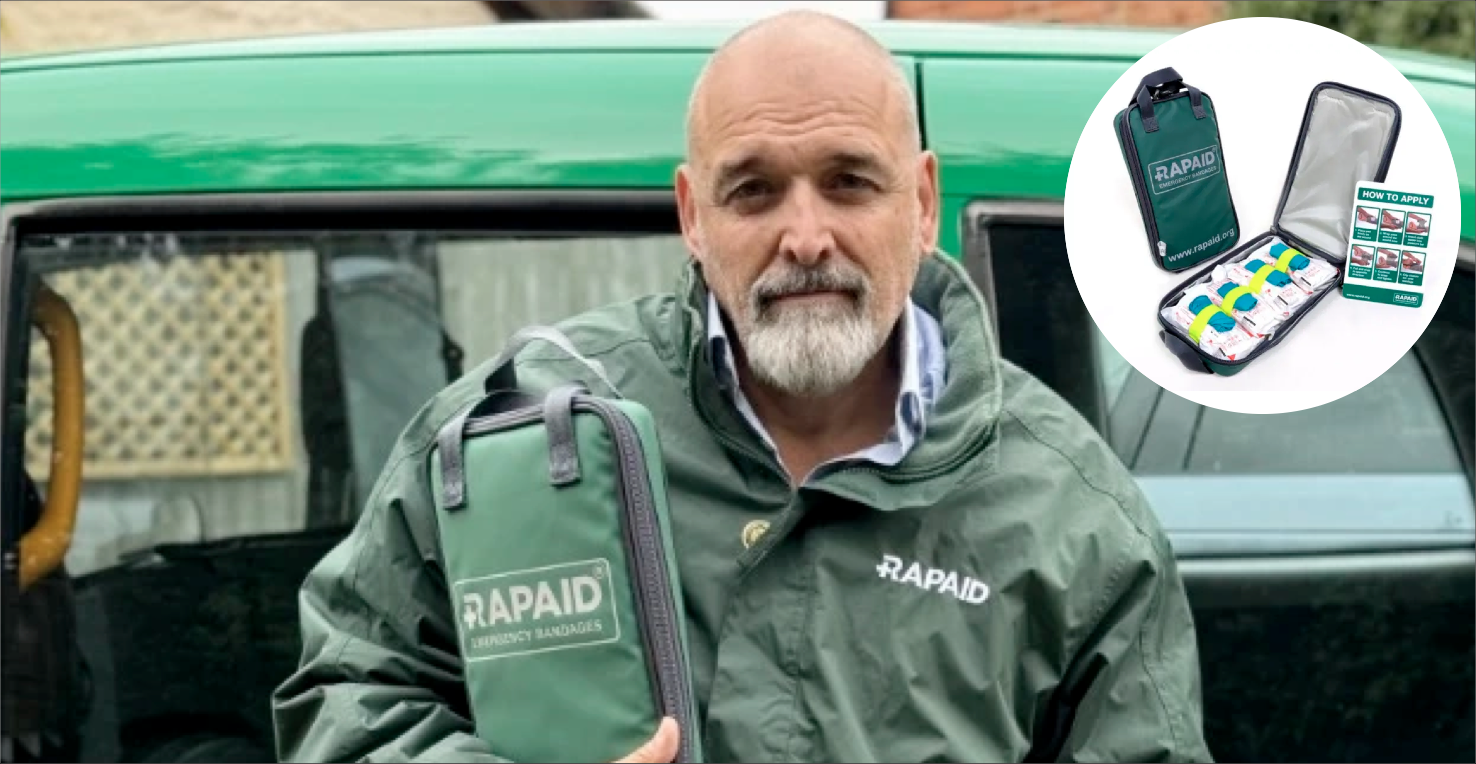
Taxi Drivers in Chippenham Become First Responders with Life-Saving Bleeding Control Kits
In a pioneering public safety initiative, taxi drivers at Chippenham station are being equipped with military-grade bandage kits to act as immediate first responders during medical emergencies. The program is spearheaded by Rapaid, a Swindon-based charity focused on tackling the escalating issue of knife crime by placing critical life-saving tools in the hands of community members often first on the scene.
The charity is distributing high-pressure tourniquet-style bandages designed to stop catastrophic arterial bleeding. This intervention provides “immediate help that could save lives” in the crucial minutes before paramedics arrive, addressing a key survival gap in trauma care.
How the Specialized Kits Work
Each kit contains four specialized bandages capable of applying approximately 30 pounds of pressure directly to a wound, along with surgical gloves for hygiene. The technology is derived from combat medicine, where controlling severe hemorrhage is the top priority for casualty survival.
Alex Chivers, a military veteran and former firearms officer who founded Rapaid, explains the urgency: “You can bleed to death in as little as five minutes if you’ve got a serious haemorrhage and the quicker direct pressure is applied, the better your chances of survival.” He emphasizes that these kits are specifically “designed for those golden five or ten minutes until help arrives,” a window where bystander action is decisive.
Proven Impact and Police Endorsement
The initiative builds on a proven track record. Chivers recounts a successful deployment at London’s King’s Cross station, where police officers retrieved a kit from a taxi rank to treat a stabbing victim. “They ran back in, dealt with the victim and saved his life,” he states, highlighting the kits’ accessibility and effectiveness.
Inspector Pete Foster of Wiltshire Police has welcomed the rollout in Chippenham. He notes that the taxi community is uniquely positioned for such a role, being “mobile throughout public areas” and often present during the night-time economy when incidents are more likely to occur. This strategic placement turns a fleet of vehicles into a distributed network of potential first responders.
For Chivers, the measure of success is straightforward and profound: “If one bandage saves one person’s life then we’ve achieved everything.” The program represents a pragmatic, community-driven approach to public safety, leveraging local infrastructure to buy critical time in medical emergencies.
Image Credit: www.phtm.co.uk