Ongoing debate highlights tensions between safety, self-employment rights and enforcement challenges across the sector
Diverging Approaches: Taxis vs. Private Hire
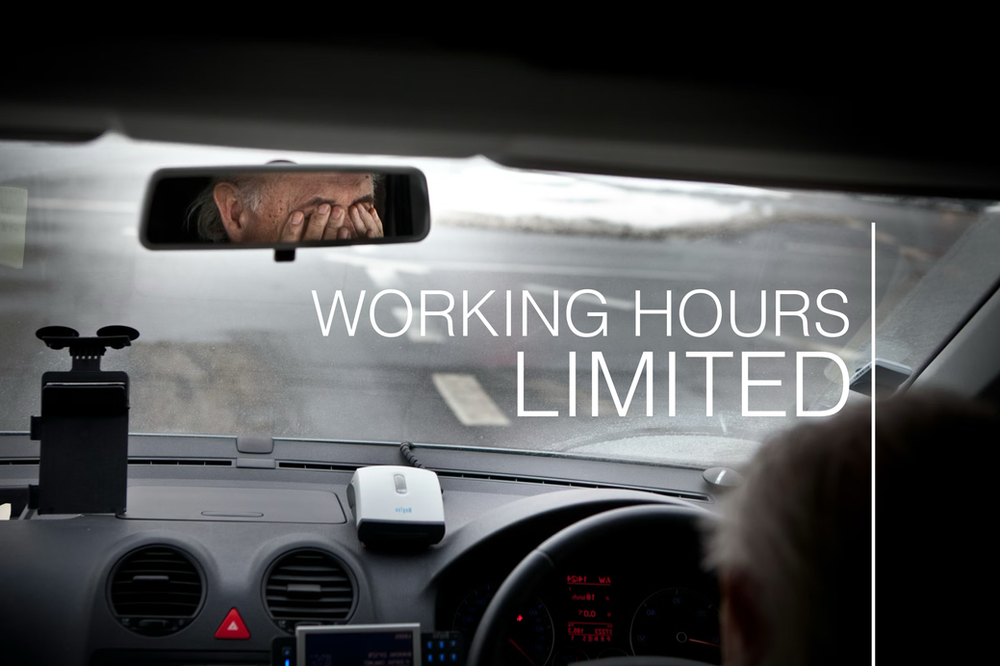
The question of whether national caps should be placed on taxi and private hire driver working hours is resurfacing in policy discussions, yet implementing a uniform rule is immensely complex. A recent policy update from Rushcliffe Borough Council promotes a 48-hour working week average without mandating it, a stance that mirrors the UK’s broader, often passive, regulatory approach. This reflects a acknowledged risk: driver fatigue can endanger public safety. However, there is little political or legal momentum to impose strict limits on a workforce that is overwhelmingly classified as self-employed, creating a fundamental tension between protective regulation and the autonomy that defines the trade.
For years, the sector has wrestled with balancing safety imperatives against the flexible working models that make the profession viable for many. In the private hire sector, major app-based operators have introduced in-app time limits intended to curb excessive hours. On the surface, this seems like a proactive safety measure. In practice, these limits are easily circumvented. A driver can simply log off one platform and onto another once they reach a cap. Without a harmonized, cross-industry system, such corporate policies risk becoming symbolic gestures rather than effective safeguards against fatigue.
The traditional taxi trade, consisting largely of independent sole traders, has consistently resisted formal working time restrictions. Many argue that as self-employed individuals, a statutory cap would constitute an unjustified restriction on their trade and livelihood. Unlike private hire drivers who depend on booking platforms for work, taxi drivers often operate with greater independence, using street ranks and independent radio circuits. Their conventional argument is that market forces and existing licensing oversight naturally regulate hours. Tariff structures are designed to allow a sustainable income without requiring punishingly long shifts. Furthermore, licensing authorities and police already possess powers to investigate and act against drivers who appear dangerously fatigued.
The Enforcement Gap and Market Realities
However, the economic reality is not uniform. In areas with dwindling demand or high competition, some drivers—both taxi and private hire—extend their working days significantly to secure enough income. While much of a taxi driver’s time on a rank may be spent waiting, it still contributes to a prolonged working day and potential fatigue. The pressure is often more acute for private hire drivers. Commission-based payment models and lower fares can incentivize longer hours. Without access to fixed ranks, they may remain logged into apps or circulating on the road between jobs, leading to more intense and continuous shifts.
From a regulatory perspective, the digital nature of private hire work presents a paradox. Every job is recorded, creating a granular, real-time dataset of driver activity. In theory, this data could allow licensing authorities to monitor patterns and swiftly identify excessive working hours. The significant obstacle is legal and operational: regulators generally lack the clear authority to access and mandate the use of this commercial data for welfare enforcement. Data sharing between private operators and public authorities is already a contentious area, primarily debated around compliance and cross-border licensing. Expanding this to include working hours would require robust legal frameworks and industry-wide cooperation that currently do not exist.