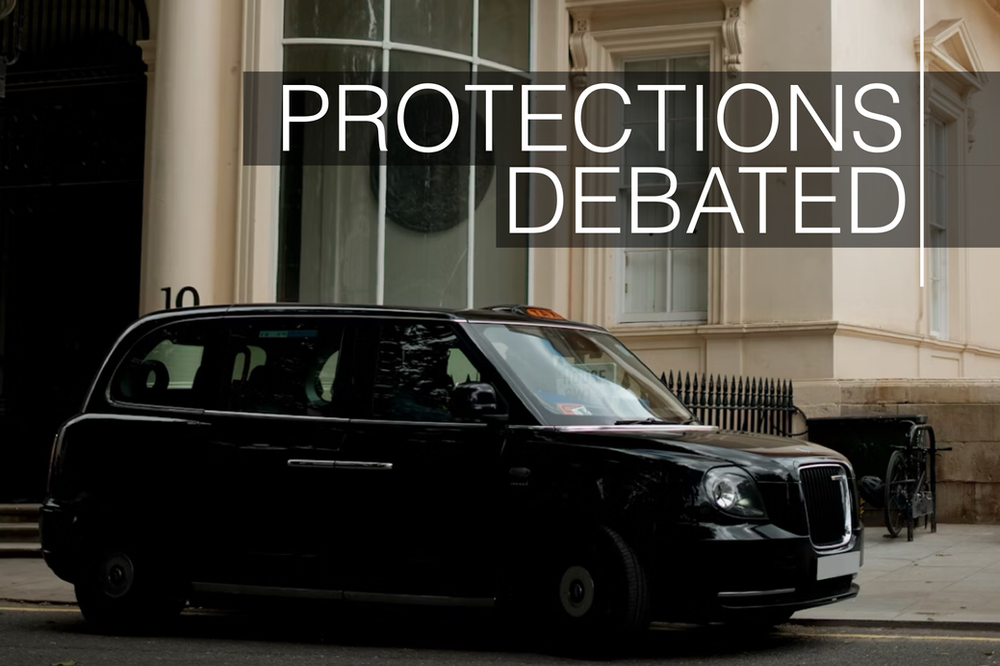
Why Taxi Drivers Were Left Out of New Assault Protections: A Lords Debate Breakdown
A pivotal debate in the House of Lords has exposed a significant gap in proposed legal protections for frontline workers. While the Crime and Policing Bill introduces a new specific offence for assaulting retail staff, an amendment to extend this protection to all public-facing workers—including taxi drivers, bus drivers, and other transport staff—was narrowly defeated.
The debate on 4 March centred on Amendment 359, tabled by Baroness Stowell of Beeston. Her proposal sought to create a broader offence of assaulting a “public-facing worker at work,” covering roles in retail, transport, commercial premises, and other customer-service environments. Stowell argued that violence against frontline staff is a cross-sector crisis, not a retail-specific issue, citing Institute of Customer Service research showing 42% of customer-facing workers experienced abuse in the six months prior.
The Safety Crisis on Our Roads and Rails
Peers repeatedly highlighted the acute risks transport workers face. Former Metropolitan Police Commissioner Lord Hogan-Howe directly referenced taxi drivers, noting they regularly confront passengers affected by drugs or alcohol and must enforce rules, yet lack the proposed new protections. “People who work in transport, such as taxi drivers… face people who are often affected by drink or drugs, for example, and have to challenge bad behaviour, but they do not receive this protection,” he stated.
This aligns with persistent industry warnings about late-night driver safety. Taxi drivers frequently manage intoxicated passengers, fare disputes, and situations where they must refuse service or terminate journeys due to threatening behaviour.
Supporting evidence came from Labour peer Lord Hendy, who cited British Transport Police data indicating a 21% rise in violence against staff between April and November 2024 compared to the previous year. He also noted that nearly two-thirds of public transport workers reported experiencing workplace violence in the past year, often while enforcing fare or ticketing rules.
Government’s Reasoning: Existing Laws Are Sufficient
Home Office minister Lord Hanson of Flint rejected the amendment, asserting that existing legislation already covers assaults on any worker providing a public service. He explained that the new retail-specific offence was introduced because shop staff uniquely enforce age-restricted sales laws and face epidemic levels of shop theft—a key Labour manifesto commitment following long-term campaigns by retail unions.
“Public-facing workers… are covered under existing legislation,” Hanson said, noting that the Police, Crime, Sentencing and Courts Act 2022 allows courts to treat assaults on public-facing workers as an aggravating sentencing factor. The government maintains that creating a separate offence for retail workers addresses a specific, severe problem without needing to legislate for every frontline role.
The Signal Sent by a Sector-Specific Law
Opposing peers warned that limiting the new offence to retail staff sends a damaging message. Baroness Doocey, for the Liberal Democrats, argued it risks implying other public-facing workers “somehow count for less.” Lord Hendy stressed the legal inconsistency: two workers could suffer identical assaults in similar circumstances but face different charges based
Image Credit: www.taxi-point.co.uk